
Key Takeaways
-
Professional education can support career pivots and advancement by building targeted, applied skills.
-
Balancing work, school, and personal responsibilities requires intentional time management and resilience.
-
Student experiences highlight the value of flexible programs designed for working professionals.
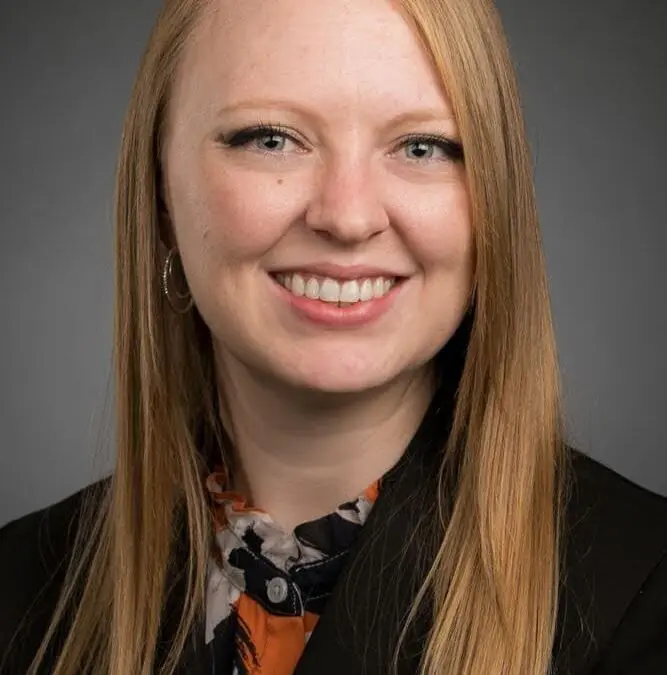
Congratulations to Mandy Carlson, a recent Healthcare Management graduate who just secured an administrative fellowship at Loma Linda University Health. Here we learn about Mandy’s background and pursuit of a master’s degree, along with her most valuable lessons learned.
Can you describe your professional background and what led you to pursuing the Healthcare Management program?
Healthcare became my passion the summer after my junior year of college. I spent eight weeks interning at Loma Linda University Health in their Business Development Department. I learned how important the operations side of healthcare is and how the decisions made by teams like business development had a lasting impact on the entire organization. From that moment on, I wanted to learn more about what I can do as a leader to make a positive impact on the healthcare world.
Five years ago, I started working for Centura Health at the Rocky Mountain Adventist Healthcare Foundation. These past five years have taught me how philanthropy can also greatly impact a healthcare organization and how a small contribution can make a big impact on a hospital or program.
What has been one of the most valuable lessons learned from your education?
The most valuable lesson I learned throughout my master’s program has been to always remember where you started and how those everyday people have voices that need to be heard to continue improving the organization. While leaders carry out the big picture and vision, the best ideas often come from those who are working on the details of the organization and are living the mission every day.
Tell us about the administrative fellowship program you’ll soon be starting (congratulations!).
I am so excited to be joining Loma Linda University Health again, the organization that started my healthcare journey six years ago. I will be working with their children’s hospital and partnering with marketing and philanthropy to continue to share the story of what their children’s hospital is doing and how philanthropy has played a role by sharing incredible stories of impact.
What do you anticipate some upcoming challenges within the health industry/your specialty area of healthcare? How has your education prepared you to take on these challenges?
I see marketing and philanthropy as an exciting challenge because they are often subjective areas. No two people respond to a story or marketing campaign the same way. The question is, how do you touch hearts in a way that instills trust in the organization and brings them to support in philanthropic ways? It’s an exciting opportunity to think outside of the box and be innovative in how people are approached but also new ways to represent the organization.
DU has played a huge part in this by challenging me in each and every class to be creative in our thinking and challenge the current status quo. I learned that healthcare is rapidly changing and we have to stay one step ahead, otherwise we will be followers instead of leaders in the healthcare industry.
Learn more about the Healthcare Management program offered through the University of Denver’s University College.